The Gut-Mold Connection: Why Mold Detox Starts With Digestion
- by Christiane Matey
- Allergies & Inflammation, Blog, Gut Health
An integrative dietitian-written guide to understanding how mold exposure disrupts your gut, why that’s stalling your recovery, and how to rebuild digestive health as part of getting better for good.
You left the water-damaged house. Or the office finally fixed that roof leak. You added that probiotic your friend mentioned and can’t remember the last time you ate cheese. Yet, your symptoms aren’t getting any better.
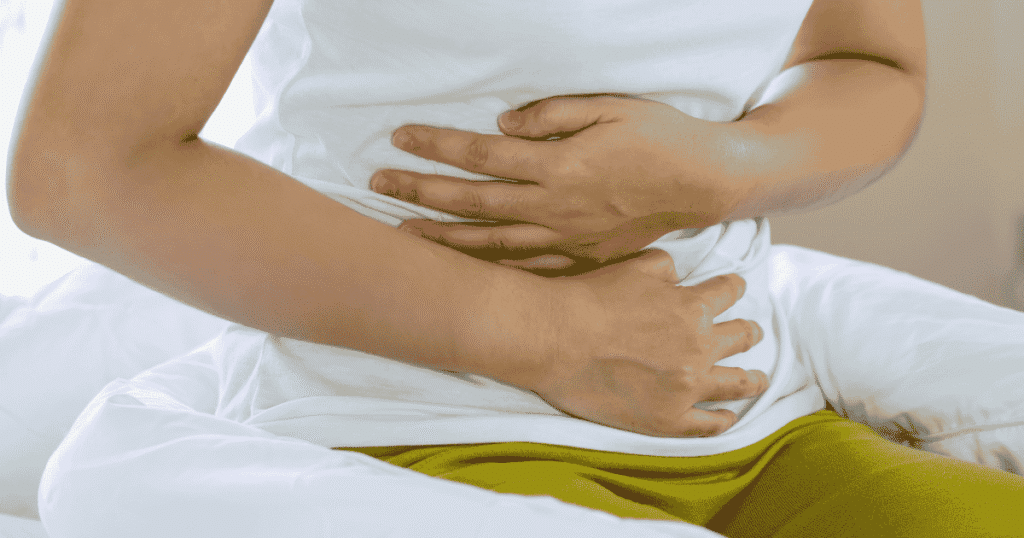
Instead, your stomach has turned into its own full-time problem. New food sensitivities showed up out of nowhere. You’re bloated after meals that never used to bother you. Some days it’s constipation, other days it’s the opposite, and neither one seems to have a pattern.
Here’s the part almost nobody explains: your gut isn’t a side effect of mold illness. Instead, it’s often the reason recovery stalls out in the first place.
If you haven’t read it yet, my guide on CIRS symptoms walks through how mold exposure triggers this whole cascade. This piece picks up where that one leaves off, right at the point where your gut becomes the bottleneck.
Why Your Gut Takes the Hit First
Mycotoxins interact directly with the lining of your intestines. In most places, that lining is only one cell layer thick. Repeated exposure wears down the tight junctions that hold those cells together. And once those junctions loosen, your gut becomes more permeable than it should be. Then, the undigested food particles, microbes, and toxins leak into your bloodstream — and your immune system reacts to every bit of it.
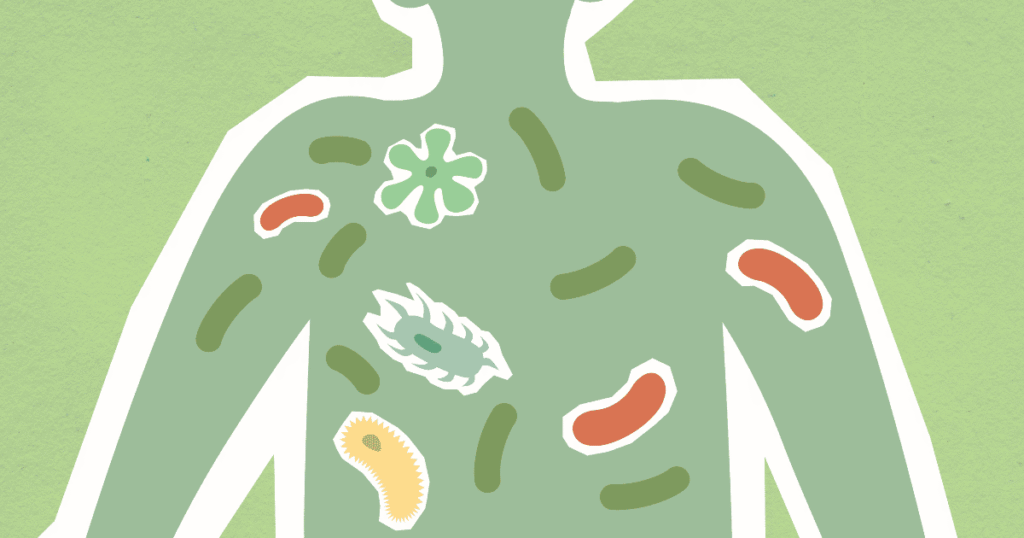
At the same time, mycotoxins reshape your gut bacteria. Beneficial strains like Lactobacillus and Bifidobacterium tend to decline. The less helpful, more inflammatory species get room to take over. A gut that’s supposed to help filter and neutralize toxins ends up doing the opposite. It becomes another source of inflammation instead of a defense against it.
The Recirculation Loop Nobody Explains
Your liver is responsible for processing mycotoxins and packaging them for removal via bile. That bile empties into your small intestine, where the toxins are supposed to bind to something and exit through a bowel movement.
“Supposed to” is doing a lot of work in that sentence. If your gut isn’t functioning well, if you’re constipated, if there isn’t anything present to bind those toxins on their way through, they don’t leave. They get reabsorbed back into your bloodstream through your intestinal wall, right back to where your liver just worked to remove them. This is called enterohepatic recirculation, and it’s one of the biggest reasons people feel like they’re detoxing in a circle instead of making forward progress.
Your gut bacteria play a role here, too. Certain bacterial byproducts can actually unlock toxins that were already packaged for removal, sending them back into circulation before they ever make it out. A struggling microbiome doesn’t just fail to help. It can actively work against you.
Signs Your Gut Is Part of the Problem
Here’s what tends to show up when your gut has become part of the cycle:
- New sensitivities to foods that never bothered you before, especially aged cheese, alcohol, vinegar, dried fruit, and other foods naturally higher in mold or yeast
- Bloating or discomfort that shows up consistently after eating, regardless of what’s on the plate
- Constipation, diarrhea, or unpredictable swings between the two
- Reflux or nausea that doesn’t respond to the usual over-the-counter fixes
- Sugar or carb cravings that feel disconnected from actual hunger
- A sense that your digestion has just never been the same since you got sick
If several of these sound familiar, your gut probably needs direct attention, not just time.
Why Binders Won’t Help If Your Gut Can’t Keep Up
Binders like activated charcoal, bentonite clay, or prescription options like cholestyramine work by grabbing onto toxins in the digestive tract so they leave through stool instead of recirculating. They’re a legitimate piece of the puzzle for a lot of people. But a binder can only carry a toxin out through an open door.
If bowel movements are sluggish and infrequent or if bile isn’t flowing well, binders end up sitting in an inefficient gut. Some people add binder after binder and feel worse instead of better — not because the approach is wrong, but because no one addressed the traffic jam. Fixing digestion isn’t a footnote to mold detox. It’s often the piece that makes everything else finally start working.
Why Some People Can’t Keep Up With Detox
Two things tend to explain why one person clears mold exposure without much trouble while another gets stuck for years: total toxin load and genetics.
Load is pretty intuitive. Mold rarely shows up alone. Add in a tick-borne infection, a past viral trigger, or everyday environmental exposures, and your system is now trying to process several sources of inflammation at once instead of just one. At some point, the volume simply outpaces what your liver, kidneys, and gut can move out the door.
Genetics can make the situation worse. Some people carry variants in the MTHFR gene, which affects methylation, a process your liver relies on heavily to package toxins for removal. Having an MTHFR variant doesn’t guarantee you’ll get sick from mold, but the sluggish methylation pathways mean slower detox pathways for someone who’s been exposed.
Clear the Drains First
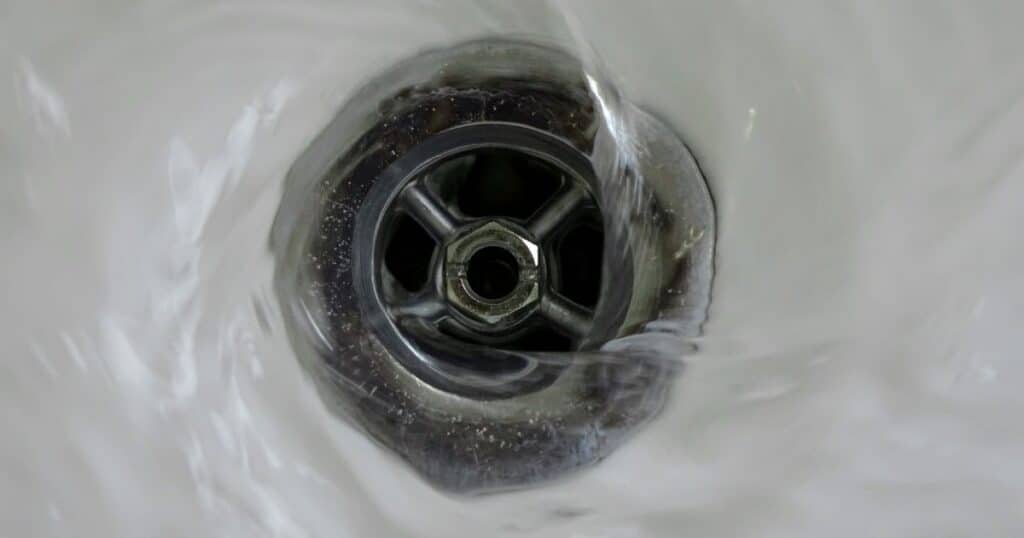
The exit routes for toxins have to be clear so toxins have somewhere to go. In practice, that usually means supporting bile production by the liver and gallbladder, along with kidney function, so that once toxins are mobilized, they have somewhere to go rather than build up in circulation. Skip this step, and it’s a lot similar to opening every faucet in the house while the drain stays clogged.
If toxins are released faster than your body can clear them, it can trigger a Herxheimer reaction, more commonly known as a “Herx.” Instead of getting better, you’re pummeled by a wave of symptoms that feels like a bad flu: pounding headache, crushing fatigue, worsening brain fog, achy joints, and a general sense of feeling sicker than when treatment began.
A lot of people mistake the symptoms for proof that treatment isn’t working, or that they’re reacting badly to something they just started. Usually, it’s a sign that detox pathways opened up before there was anywhere for the toxins to go. It’s exactly why the order of operations matters so much, and why working with a practitioner who supports your liver, gallbladder, and kidneys before ramping up detox makes such a difference in how tolerable this process actually feels.
Rebuilding the Gut While You Recover From Mold
This is where nutrition does some of its most important work in the whole CIRS process. A few pieces tend to matter most:
- Getting bowel movements regular and complete. Without this, the rest of the plan has nowhere to go.
- Supporting bile flow, since bile is the delivery truck getting toxins out of the liver and into the gut in the first place.
- Rebuilding beneficial bacteria with the right food and probiotic strategy, since certain strains genuinely help neutralize mycotoxins rather than just coexist with them.
- Reducing gut irritants temporarily, particularly the higher-mold foods that can keep reintroducing a small amount of what you’re trying to clear.
- Repairing the gut lining itself, so those tight junctions between cells can close back up and stop letting things through that don’t belong in your bloodstream.
The best approach depends on where you are in treatment, what your labs show, and how your gut is functioning. It’s why DIY detox plans built for someone else’s body typically don’t work.
Why This Shows Up So Often Around Here
Charlotte and Mooresville make this whole picture a little more complicated. The humidity that keeps our homes at risk for water damage also happens to pair with a local food and drink culture built around exactly the things a recovering gut needs to watch: craft breweries scattered around Lake Norman, farm-to-table cheese boards, local wineries, and no shortage of good barbecue with a side of vinegar-based sauce.

None of that means giving up your favorite Friday night out forever. It does mean that unwinding a mold-related gut problem usually requires a closer look at what’s on the plate day to day, not just what’s growing behind the drywall. A lot of people in this area are unknowingly feeding a low-grade mycotoxin load right back into a gut that’s already struggling to keep up.
Mold Detox Isn’t a DIY Project
Mold recovery has to happen in a specific sequence: remove the source of exposure, support the body’s ability to clear toxins, then rebuild what was damaged along the way. Your gut sits right in the middle of that sequence. Try to skip it or treat it as an afterthought, and the rest of the plan tends to stall no matter how disciplined you are about everything else.
That’s frustrating when you’ve already done the hard work of leaving the exposure behind. It’s also truly good news because a gut that’s part of the problem can become part of the solution with proper support at the right time.
If you’ve been treating your mold exposure and still feel stuck, especially if your digestion has never quite recovered, it’s worth looking at gut health as its own piece of the puzzle. Haven’t confirmed CIRS yet, but a lot of this still sounds familiar? Start with the symptom checklist first, then come back here once you’ve got a clearer picture.
Let’s Look at Your Gut as Part of Your Recovery
Insurance-Covered Dietitian Sessions
Many insurance plans cover our one-on-one dietitian sessions at 100%. We’ll happily verify your benefits before your first appointment so there are no surprises.
Advanced Wellness Support
Our premium cash-pay services with advanced functional lab testing are available for those who want to go deeper. These services can be combined with insurance-covered sessions.
Share this Post

Christiane Matey
Integrative Nutritionist & Dietitian