Autophagy and Aging: What Your Cells Are Trying to Tell You
- by Christiane Matey
- Anti-Aging, Blog, Healthy Living

You’re eating salads and taking walks. You’ve cut back on sugar, you’re drinking more water than you thought was humanly possible, and you still wake up tired, foggy, and a little puffier than you’d like. The scale hasn’t budged in months, even though you haven’t changed a thing. Somewhere around 40, it starts to feel like your body quietly changed the rules without telling you.
Before you chalk it up to “just getting older,” there’s a process worth understanding, one that’s been running in the background of every cell in your body since before you were born. It’s called autophagy, and it might be the missing piece explaining why some people seem to age well while others feel like they’re falling apart despite doing everything “right.”
This piece builds on the American Academy of Anti-Aging Medicine’s excellent overview of autophagy, but takes it further into what you can actually do about it at the dinner table.
Your Cells Have Been Spring Cleaning Long Before It Was Trendy
Autophagy literally means “self-eating,” which sounds unsettling until you understand what it actually does. Inside every cell, there’s a constant process of building new proteins and structures, alongside an equally important process of clearing out the old, damaged, or worn-out ones. When a cell has broken, misfolded, or expired parts, it wraps them up in a little membrane called an autophagosome and ships them off to a lysosome (essentially a recycling center) to be broken down and reused as building blocks for new, healthy cell parts.
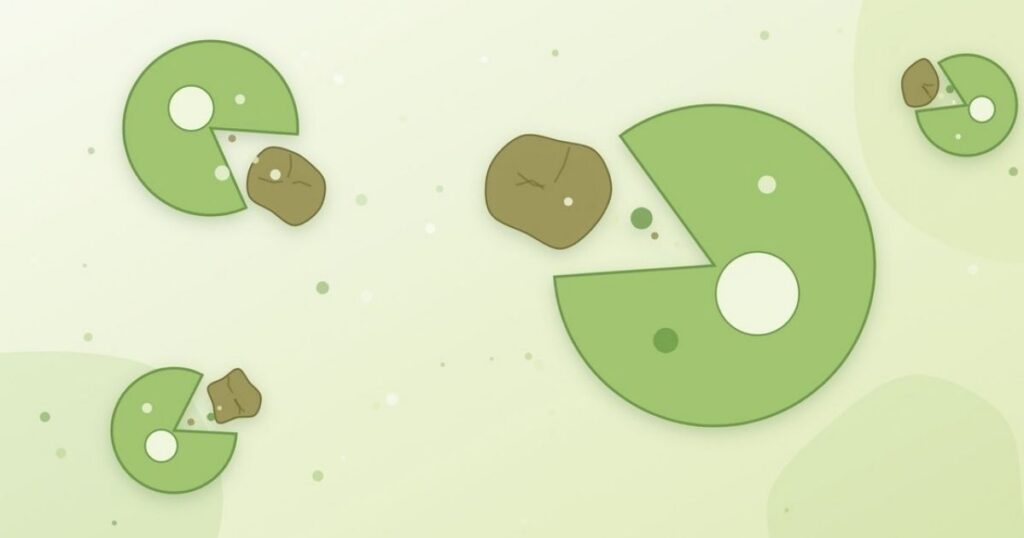
This isn’t some fringe wellness theory. In 2016, Japanese cell biologist Yoshinori Ohsumi won the Nobel Prize in Physiology or Medicine for mapping out exactly how this process works. Scientists had known autophagy existed since the 1960s, but Ohsumi’s research proved how central it is to keeping cells, and by extension you, functioning properly.
Two versions of this process come up often in the research: mitophagy, which clears out damaged mitochondria (the little engines that produce your energy), and xenophagy, which helps your cells identify and destroy invading pathogens. Both matter more than you’d think when it comes to how you feel day to day.
Why This Starts to Matter More With Every Birthday
Here’s the frustrating part: autophagy naturally slows down as you age. Just when your body could use more cellular cleanup, it does less of it. Damaged proteins and worn-out mitochondria stick around longer instead of being cleared out, and that buildup shows up as the symptoms so many of my clients describe: brain fog, sluggish energy, slower recovery from workouts, and inflammation that seems to have no clear source.
Researchers have also found a link between impaired autophagy and the protein buildup seen in neurodegenerative conditions such as Alzheimer’s and Parkinson’s. That doesn’t mean a slow autophagy process guarantees anything (bodies are complicated, and no single pathway tells the whole story), but it’s one more reason cellular cleanup deserves more attention than it receives.
The good news: while you can’t stop the natural slowdown, you have more influence over this process than you’d expect, and most of that influence comes down to two things you already control every day: when you eat and what you eat.
The Diet-Autophagy Connection: Where Nutrition Actually Comes In
Your body reads a full stomach as a signal to grow, build, and store. It reads an empty one, at least for a while, as a signal to clean house. Two pathways largely control that switch: mTOR, which favors growth and gets activated by food (especially protein), and AMPK, which favors repair and gets activated by an energy deficit. You can’t run both processes at full volume at the same time, so giving your body regular breaks from the growth signal allows the repair signal to take over.
This is the actual mechanism behind why intermittent fasting and time-restricted eating get so much attention in longevity circles. Your body can start shifting into a mild fat-burning, autophagy-friendly state after roughly 12 hours without food, which honestly isn’t far from what happens overnight between dinner and breakfast for a lot of people already. Stretching that window to 14 or 16 hours, closing the kitchen a bit earlier and opening it a bit later, gives the process more room to work. Lower-carbohydrate and ketogenic approaches nudge things in a similar direction by keeping insulin low, which is one more reason they tend to come up in the same conversation as GLP-1 support and metabolic health.
None of this means starving yourself or skipping meals out of guilt. It means being more intentional about the hours you’re not eating, so the hours you are eating can do their job.
Foods That Support the Process (Yes, You Still Get to Eat)
Timing is only half the picture. Certain compounds in food seem to nudge autophagy along even outside a fasting window, which is where things get genuinely interesting if you’d rather eat your way toward feeling better than white-knuckle your way through a fast.
Spermidine
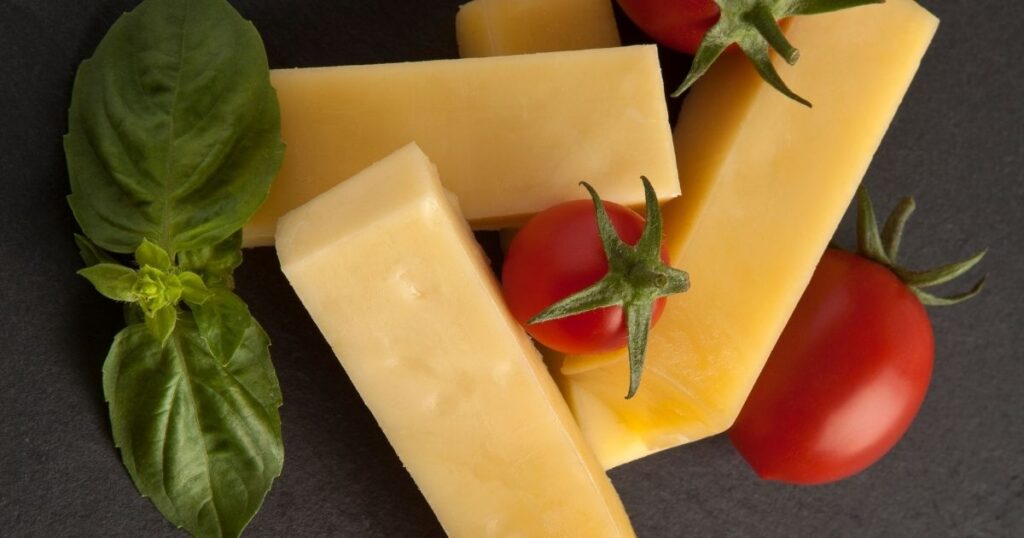
Spermidine is probably the most studied of these compounds. It’s a naturally occurring compound found in aged cheese, wheat germ, mushrooms, soybeans, and natto. Recent research has shown it plays a direct role in fasting-related autophagy and longevity. So no, I won’t ask you to swear off cheese forever. In fact, you might want to think of a well-aged Parmesan as more than a garnish.
Urolithin A (And Your Gut)
Urolithin A is another one worth knowing about, and it happens to connect two things I talk about constantly with clients: gut health and cellular aging. Your body doesn’t absorb urolithin A directly from food. Instead, certain gut bacteria convert compounds found in pomegranates and walnuts into urolithin A, which then supports mitophagy. If your gut microbiome isn’t diverse or balanced, you may not produce much urolithin A no matter how many pomegranates you eat, which is exactly why I rarely look at cellular health or longevity without also looking at digestion and gut health first.
Polyphenols
Then there are the polyphenols you’ve likely heard of in other contexts: EGCG in green tea, resveratrol in grapes and berries, curcumin in turmeric, and polyphenols in high-quality olive oil. None of these are magic on their own, but when combined across regular meals, they add up to meaningful support for the same pathways that spermidine and urolithin A work through.

What About Muscle and Performance?
If you’re someone who trains hard or is simply trying to hold onto muscle as you get older (and after 40, that’s most of us), you’ve probably wondered whether fasting and autophagy work against that goal. It’s a fair question, since mTOR, the same pathway that gets dialed down during a fast, is also what your body needs to build and repair muscle.
The honest answer is that balance matters more than extremes in either direction. Research on older adults has found that net protein balance is closely tied to the same genes involved in autophagy, mitochondrial health, and fat metabolism, meaning your protein intake and cellular cleanup aren’t competing goals. They’re two settings on the same dial. The practical takeaway is to keep fasting windows reasonable rather than extreme, prioritize protein at the meals you do eat rather than grazing all day, and time your higher-protein meals around training rather than restricting protein across the board. This is exactly the kind of thing that benefits from a personalized plan rather than a one-size-fits-all rule, since what works for someone managing a GLP-1 medication looks very different from what works for someone training for a half marathon.
What an Autophagy-Friendly Day Might Actually Look Like
If this all sounds abstract, here’s what it tends to look like in practice for a lot of our clients:
- Close the kitchen by early evening, ideally around 7 p.m., and let that mark the start of your fasting window
- Black coffee or plain tea in the morning is fine; no need to force yourself to skip caffeine entirely
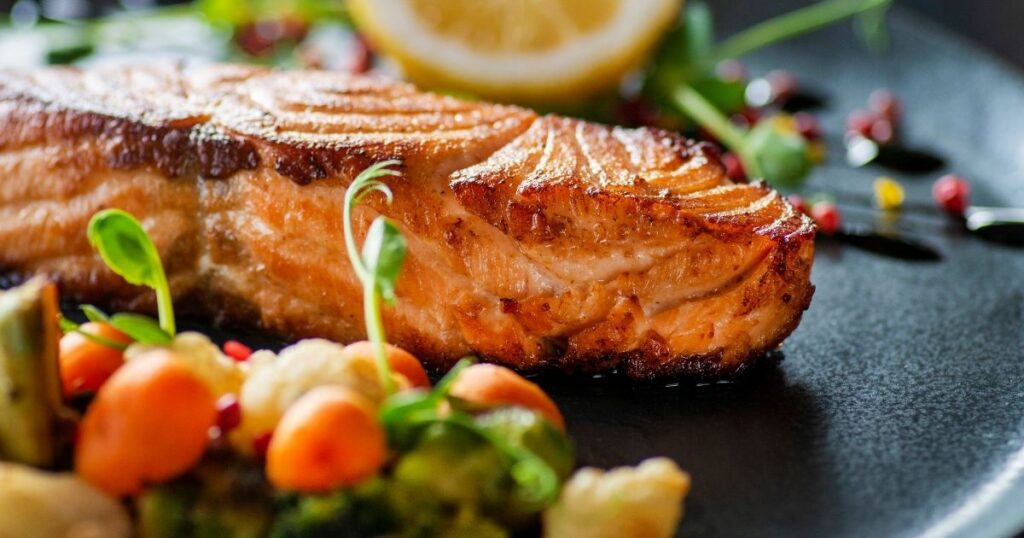
- Break your fast around midday with a meal built around protein, fiber, and color, think eggs and greens, or salmon and roasted vegetables
- Work spermidine and polyphenol sources into meals across the day: aged cheese, mushrooms, walnuts, berries, olive oil, green tea
- Repeat most days, with flexibility built in for the days life doesn’t cooperate
None of this requires special supplements or a complicated protocol. It requires consistency, which is usually the harder part.
ProLon Fast-Mimicking Nutrition Program
Want an easy way to get into autophagy without feeling like you’re starving? I’ve personally tried and recommend ProLon’s 5-day fast-mimicking program to many of my clients. Learn more about ProLon here (and get 20% off), but please consult us first to make sure it aligns with your health goals.
A Quick Word of Caution
Fasting and cellular cleanup aren’t the right fit for everyone, and that matters more than the wellness internet usually acknowledges. Pregnant or breastfeeding women, anyone with a history of disordered eating, and people managing diabetes or taking medications that affect blood sugar or blood pressure should consult a provider before changing their eating windows. The goal is to support your body, not to stress it into a corner.
You Don’t Have to Figure This Out Alone
Understanding autophagy is one thing. Figuring out how to apply it to your body, medications, gut health, training schedule, and daily life is another. That’s the part we help clients with every day at MINT Nutrition, whether we’re building a plan around a GLP-1 medication, correcting a gut microbiome that’s working against you, or simply figuring out why you feel ten years older than you should.
If you’re ready to stop guessing and start working with your biology rather than against it, let’s build a plan that fits your life, not someone else’s Instagram feed.
Let’s Find Out What Your Cells Have to Say
Insurance-Covered Dietitian Sessions
Many insurance plans cover our one-on-one dietitian sessions at 100%. We’ll happily verify your benefits before your first appointment so there are no surprises.
Advanced Wellness Support
Our premium cash-pay services with advanced functional lab testing are available for those who want to go deeper. These services can be combined with insurance-covered sessions.
Share this Post

Christiane Matey
Integrative Nutritionist & Dietitian