
Your Body Clock After 40: How Circadian Rhythm Shapes Aging, Sleep, and Energy
- by Christiane Matey
- Anti-Aging, Blog, Healthy Living

You slept for eight hours but still feel like you got hit by a truck. Your energy tanks around 3 p.m. no matter what you had for lunch, and lately you’re wide awake at midnight and groggy again by 7 a.m. like your internal clock and your real-life schedule stopped speaking to each other.
That disconnect has a name: circadian rhythm, the roughly 24-hour internal clock that runs far more of your body than just your sleep. It quietly directs your metabolism, hormones, body temperature, and energy levels, day and night, whether you’re paying attention to it or not.
This article builds on the American Academy of Anti-Aging Medicine’s overview of the circadian clock and aging, but focuses on what we discuss most in our offices: what you eat, when you eat it, and how that timing affects the way you age.
Your Body Has More Than One Clock
Your master clock lives in a tiny cluster of brain cells called the suprachiasmatic nucleus, and it takes most of its cues from light hitting your eyes each morning. But you also have peripheral clocks tucked into your liver, gut, muscles, and fat tissue, and those clocks take their cues largely from food rather than light.
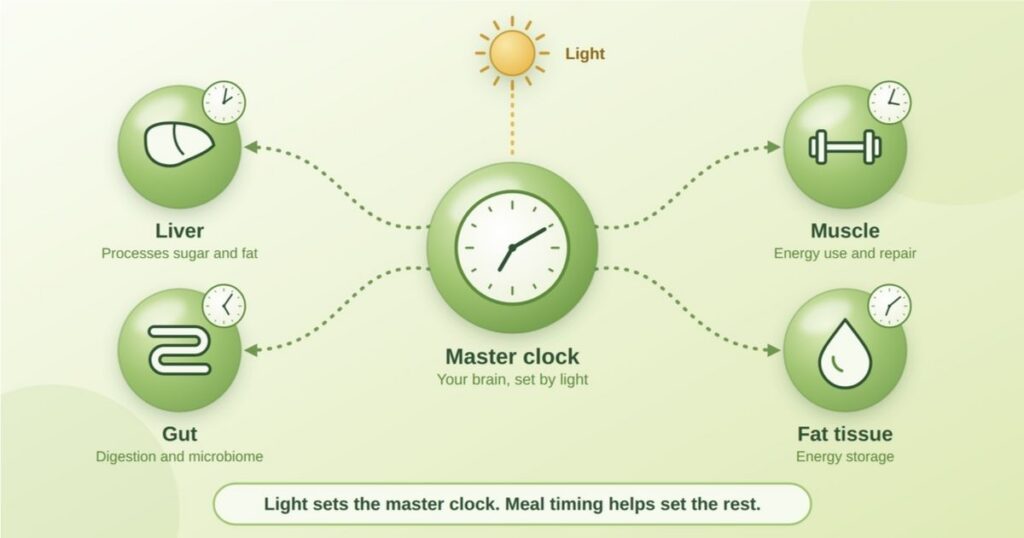
That distinction matters more than it sounds like it should. When your master clock says “daytime” based on light exposure, but your liver and gut are getting food signals at odd hours because of late-night snacking or an erratic eating schedule, your organs end up disagreeing about what time it is. Researchers call this circadian misalignment, and it is a big part of why shift workers and chronic late-night eaters tend to struggle with weight, blood sugar, and energy no matter how “clean” their diet looks on paper.
Why This Gets Louder as You Age
As you get older, the signal from your master clock naturally weakens. Sleep becomes more fragmented, your core body temperature rhythm flattens, and hormones like cortisol and melatonin lose the sharp peaks and valleys that used to keep everything running on time. This is a big part of what I mean when clients ask what goes into healthy, proactive aging work: it’s rarely just one system breaking down. It’s usually several rhythms drifting out of sync.
Those shifts are also linked to metabolic decline, insulin resistance, and stubborn weight gain, especially around the midsection. That overlap is exactly why circadian health comes up so often in our weight management work, especially with clients taking a GLP-1 medication. Insulin sensitivity itself follows a daily rhythm, which means the same medication and the same meal can behave differently depending on the hour you take them.
The Sleep-Mitochondria Loop Nobody Warns You About
Your mitochondria, the structures inside your cells that produce energy, run on their own circadian schedule, too. Poor or fragmented sleep increases oxidative stress and reactive oxygen species, making your cells less efficient at producing energy. That oxidative stress then further disrupts sleep architecture, which is how one bad night can quietly turn into a bad month.
Here’s where it connects to something we covered last month: autophagy, your cells’ cleanup process, runs on its own circadian schedule, ramping up overnight during deep sleep. Cut your sleep short, and you aren’t just tired the next day. You’re also cutting into the window your cells use to repair themselves.
Eating With Your Clock Instead of Against It
This is where nutrition comes in, and it goes beyond the usual “don’t eat too close to bedtime” advice. The exact same meal, with the exact same calories, gets processed differently depending on the time of day you eat it.
Insulin sensitivity tends to be highest in the morning and drops as the day goes on, which means your body handles carbohydrates and blood sugar more efficiently earlier in the day than late at night. Research on eating timing relative to a person’s internal clock has found that eating later in your personal circadian day is associated with lower insulin sensitivity, independent of what you actually ate.
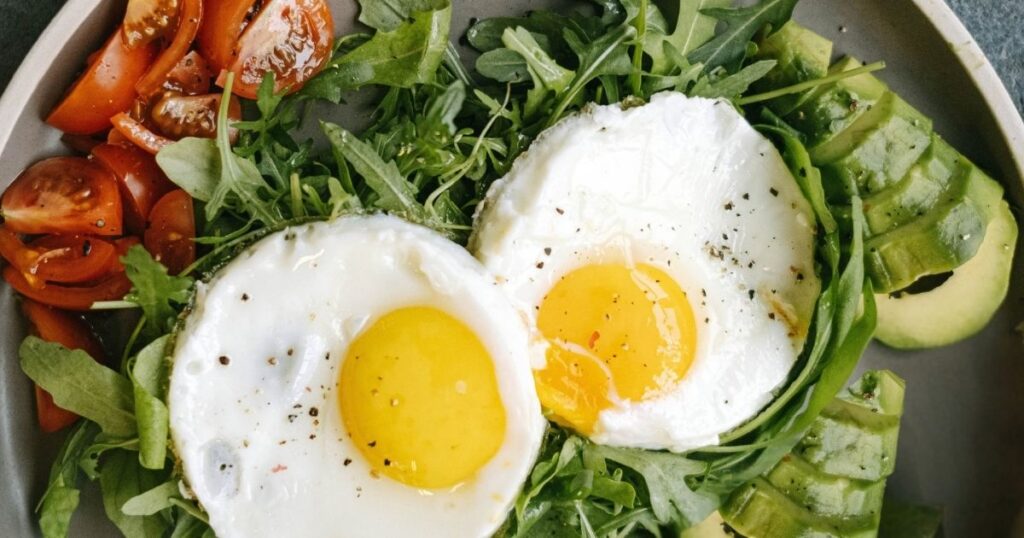
The practical version: front-loading your calories with a protein-rich breakfast, a substantial lunch, and a lighter dinner tends to work with your biology rather than against it. That’s the opposite of the “save my calories for a big dinner” pattern most people default to, and it’s worth rethinking, especially if you’re already working on blood sugar or weight goals.
Small Daily Habits That Help Reset the Clock
None of this requires a sleep lab or a strict protocol. A handful of consistent daily cues do most of the work.
Morning Light
Getting outside within the first hour of waking, without sunglasses, helps set your master clock for the entire day. Research on light exposure and cortisol has found that the shift from dim to bright light in the morning triggers a healthy, immediate rise in cortisol, the same hormone that helps you feel alert rather than wired. Waiting until noon for that first light exposure blunts the effect.
Evening Wind-Down
Bright light at night works against you the same way morning light works for you. It suppresses melatonin and confuses your master clock about what time it actually is. Dimming the lights and stepping away from screens for the last 30 to 60 minutes before bed gives melatonin room to rise on schedule.

Food and Drink Timing
A few specific foods and habits pull real weight here. Tart cherries are one of the more studied options; research on tart cherry juice and sleep points to a modest but real melatonin-supporting effect. Foods with tryptophan, like turkey, eggs, and pumpkin seeds, along with magnesium-rich foods like leafy greens and almonds, support the pathway your body uses to make melatonin. Caffeine deserves its own mention: it has a half-life of roughly five to six hours, so that 2 p.m. coffee is still about half-active in your system at 8 p.m. Cutting caffeine off by early afternoon matters more than most people realize.
A Word About Your Gut
Your gut bacteria also run on their own daily rhythm, and emerging research on the gut microbiome’s circadian rhythm shows that irregular eating patterns, especially frequent late-night meals, can throw those microbial rhythms off course the same way they throw yours off. This is a big reason why gut health work and circadian work overlap so heavily in my practice; you rarely fix one without touching the other.
Keep Weekends Consistent
Sleeping in two or three hours later on weekends creates what researchers call social jet lag, essentially giving yourself jet lag without ever leaving town. Keeping your wake time within about an hour of your weekday schedule protects hormone rhythms, including those tied to hormone balance, that depend more on consistency than perfection.
What About Exercise?
Morning or early-afternoon movement, especially outdoors, reinforces the same light signal that anchors your master clock and tends to sync your body faster than an evening workout would. Late, intense evening exercise can delay melatonin onset for some people, though this varies quite a bit from person to person. If you are working with me on athletic performance, the timing of your training matters almost as much as the training itself when it comes to recovery and sleep quality.
A Circadian-Friendly Day, Roughly
Here’s what this tends to look like in practice for a lot of our clients:
- Get outside within the first hour of waking, even if it’s just ten minutes on the porch with coffee.
- Eat a real breakfast with protein within an hour or two of waking, rather than skipping it to “save” calories.
- Make your biggest meal an earlier one, and keep dinner lighter and a few hours before bed.
- Cut caffeine off by early-to-mid afternoon, roughly 2 p.m. at the latest.
- Dim the lights and put the phone down 30 to 60 minutes before bed.
- Keep your wake time consistent within about an hour, weekends included.
A Quick Word of Caution
You Don’t Have to Figure This Out Alone
Let’s Talk About What’s Going On
Insurance-Covered Dietitian Sessions
Many insurance plans cover our one-on-one dietitian sessions at 100%. We’ll happily verify your benefits before your first appointment so there are no surprises.
Advanced Wellness Support
Our premium cash-pay services with advanced functional lab testing are available for those who want to go deeper. These services can be combined with insurance-covered sessions.
Share this Post
Christiane Matey
Integrative Nutritionist & Dietitian